No hacking says Nintendo as the latest Wii Update 3.4 removes any save or program files detected as being unauthorised.
read more | digg story
Tuesday, November 18, 2008

Sunday, November 16, 2008
The Killers to Rock World Tour
Downloadable content from rock band The Killers will keep all you humans Mr.Brightside.
read more | digg story
read more | digg story
Saturday, November 15, 2008
New Resident Evil 5 Screens
Eye candyalicious, heads up if your craving RE5 these probably won't make it easier...
read more | digg story
read more | digg story
GTA: Chinatown Wars Delayed to Between Feb - April
After stating we'd see GTA: Chinatown Wars before February 1st 2009 the Take-Two CEO has stated he now expects the title to fall between February and April.
read more | digg story
read more | digg story
Resident Evil 2 Remake a Possibility
Many Wiimakes have been successful, especially those from the Resident Evil series, so it makes sense right?
read more | digg story
read more | digg story
Gears of War 2 Sells Two Million Copies Over Launch Weekend
Gears of War 2 has sold over two million copies over it's launch weekend and broken Xbox Live records, are you surprised? Probably not...
read more | digg story
read more | digg story
Saturday, November 8, 2008
Grand Theft Auto Series History

One of the most controversial and popular gaming series of the current and past generations, Rockstar's Grand Theft Auto is one of the most talked about and played games of all time. The sandbox open-ended game features a mix of violence, action, adventure and driving and has gained a reputation for it's violent undertones and mature content. Beginning in 1997, nine games later in March 2008 the series has sold over 70 million copies worldwide.
Gameplay
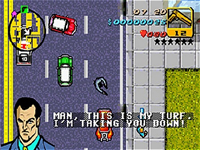
The aim of the top down perspective Grand Theft Auto games was to complete a number of levels by accumulating a certain number of points. This could be achieved through a number of events such as destroying the city, and causing general mayhem. The points earned could be multiplied if a mission such as taxing people around was completed. The game featured a mix of driving and shooting in an open-ended world giving the player freedom to do as they wish.
The core gameplay of the 3D GTA games involves shooting and driving elements presented in an open-ended world in third person. When on foot the character is able to walk, run and jump, with climbing and swimming being included in some of the more recent titles. As well as using different firearms the player is able of fighting in hand to hand combat as well as with a variety of general objects such as a baseball bat. Different vehicles including cars, boats, helicopters, planes and motorcycles are available throughout the games all of which can be stolen. The open ended gameplay allows the player to do as they wish, while the main story missions are required to be completed in order to advance to new areas, they are not required and can be played through at the gamers leisure. The player can participate in various side missions, such as playing the role of a taxi or ambulance driver as well as finding hidden packages scattered around the city. If too much mayhem is caused you'll attracted attention from the authorities and get yourself involved in a good old fashion police chase.
The Games
Grand Theft Auto
Platform / Release
Dos 1997
PlayStation / PC 1998
Gameboy Color: 1999
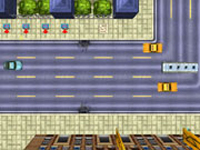
The original game took place in three familiar cities, Liberty City, Vice City and San Andreas, which played host to a variety of different levels. During these levels the player had a target number of points which they had to achieve and 5 lives to do so. There were 2 levels available in each of the three cities, players were directed to a pay phone were they would receive the first of a series of criminal missions which would aid in accumulating the required points but were not compulsory. Many players found this a frustrating and challenging task as there was no save system and after 5 lives it was game over. Players are free to do as they like to gain the required points, this could be through causing death and destruction or stealing cars to sell. To finish the levels faster it was possible to gain multipliers by completing specific missions, this would increase the score given for anything that the player achieved. These missions were scatter across the city and activated via a payphone. They varied from taxi jobs, to assassinations, car theft and getaways after bank heists.
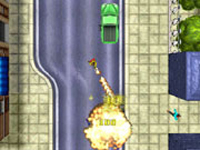
A large part of the game, and why it gained many followers, was the ability to explore the city and do as you please. This involved stealing cars, acts of violence, finding hidden missions and causing general mayhem while trying to evade police. Many players chose to run amuck through the city with an arsenal of weapons including riffles, rocket launchers and flamethrowers rather than complete the designated missions.
GTA suffered average success critically due to the poor animations and the glitchy nature of the game. Many players still found enjoyment in it, enjoying the detail of different cars providing different speeds and handling and the music played on the radio that varied depending on type of car that you were using. Those who played GTA and enjoyed it did so not because of the large production value but for the games free roaming nature, the beginning of one of the biggest series in gaming was here.
Grand Theft Auto: Mission Packs (Expansion)
Platform / Release
Windows PC March 31, 1999
Dos March 31, 1999
PlayStation April 29, 1999
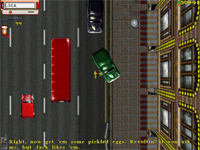
The first of 2 expansion packs to be released GTA: Mission Pact #1: London, 1969 was released in 1999. The expansion played very much like the original GTA with the exception of that it was based in London during 1969 as the title implies, rather than the fiction cities of GTA. If the player ran over a group of "soap dodging hippies" without slowing down they were rewarded with a cash bonus followed by a message saying "KEEP LONDON TIDY!" Grand Theft Auto: London, 1969 was the first ever expansion pack to be released on the PlayStation.
Platform / Release
Windows PC: June 1, 1999
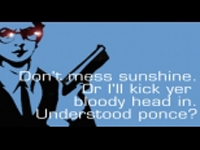
The second expansion pack in the Grand Theft Auto series was set 8 years prior to the first in 1961 making it the earliest GTA game chronologically. The expansion featured new missions, 22 new vehicles and a multiplayer deathmatch map based on Manchester. The game was only available on PC and was free to download, although it required GTA: London 1969, which required the original Grand Theft Auto.
Grand Theft Auto 2
Platform / Release
PlayStation October 22, 1999
Windows PC: October 27, 1999
Dreamcast: May 2, 2000
Gameboy Color: Dec 25, 2000
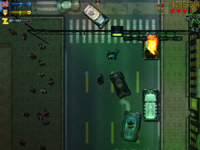
As you progressed through the game your were able to purchase new weapons and improve your cars. Apart from this the game played and looked similar to the original, the primitive top down 2D graphics were still in use as was the system of accumulating points to progress to the next level. Grand Theft Auto 2 improved the saving feature from the original which only allowed you to save when finishing a city. Now if Claude entered a church with $50,000 a voice announced "Hallelujah! Another soul saved!" notifying the player the game had been saved. If Claude did not have enough money the voice would say "Eternal Damnation! No donation, no salvation!". Besides some minor upgrades GTA2 was very similar to its predecessor.
Grand Theft Auto III
Platform / Release
PlayStation 2: October 22, 2001
Windows PC May 20, 2002
Xbox October 31, 2003
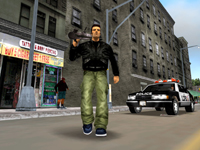
You take the role of a nameless criminal who was betrayed by his girlfriend, now you must climb up the criminal ladder in order to confront her. The game is set in Liberty City, in the autumn of 2001. The new perspective gave players added incentive to explore the city as everything appeared much more realistic than the previous games with names on storefronts, buildings to visit and signs to read. The game implemented the day/night system adding more realism to the series as well as licensed music which rotated through different radio stations.
The style of the game had not changed from the first two instalments, you were still able to explore the city as you wished, shoot people, steal cars, cause general mayhem and get involved in a police dispute. Not only was this now in full 3D, it was also supported with a well written plot and thought out missions. In your rise to power you must complete missions for gangs, corrupt police and the media while becoming close to the mafia bosses wife Maria.
I'm not too worried about it
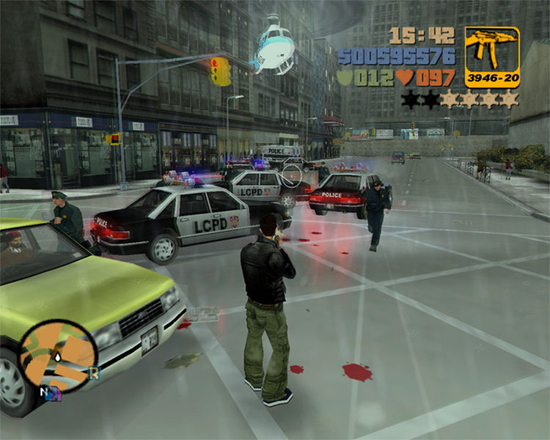
For those not interested in the main story of GTA III there was plenty of other tasks to keep you occupied. Half the fun was committing various crimes to raise your 'wanted level', the more crimes that were committed the higher this would be raised and higher authority would come to aid the police persuing you. You could also participate in side missions by stealing emergency vehicles or taxies, which included going on vigilante missions in police cars chasing down criminals in an ironic twist.
Upon it's release GTA III receive very positive reviews, consistently ranking above 90%. Many review publications labelled it as 'revolutionary' and deservingly awarded it game of the year for 2001. The first two games in the series had received underground success but GTA III was the first title to gain mainstream success along with very positive reviews. Many 'GTA Clones' have emerged singe the release of GTA III which base themselves on the same sandbox open-ended style of play as the GTA games. As of March 2008 it has sold 14.5 million copies worldwide.
Grand Theft Auto: Vice City
Platform / Release
PlayStation 2 October 27, 2002
Windows PC: May 13, 2003
Xbox October 31, 2003
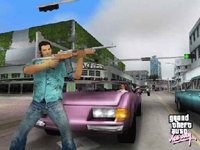
Set in the 1980's you take the role of Tommy Vercetti, a member of the mafia who has recently been released from prison. You had been double crossed in a drug deal and now have to set out to find who had betrayed you, as you climbed up the criminal ladder of Vice City. As in GTA III you had to search for missions from a variety of sources, and could also participate in different side missions such as finding hidden packages and robbing shops in malls.
Vice City added more features and style through both visual and audio aspects to the winning formula of GTAIII. It received extremely positive reviews from the media receiving above 95% from a range of gaming publications. It was highly praised for its open ended gameplay and re-created 1980’s atmosphere. As of March 2008, Grand Theft Auto: Vice City has sold over 17.5 million copies worldwide.
Grand Theft Auto Advance
Platform / Release
Gameboy Advance October 24, 2004
Grand Theft Auto: San Andreas
Platform / Release
PlayStation 2: October 26, 2004
Windows PC: June 7, 2005
Xbox: June 7, 2005
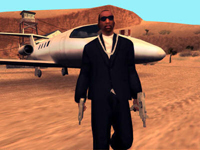
Grand Theft Auto: San Andreas met all of its expectations and was received extremely well, receiving scores even higher than those obtained by the previous 2 titles, including multiple scores over 98% from leading gaming publications. The game was praised for the open-ended play, the storyline, incredible voice acting and the sheer size of San Andreas. It did receive some criticism for poor character models and glitchy graphics as well as some control issues especially with aiming. Some reviews noted that it included a lot of new content and features, but the gameplay itself had not been redefined. Overall GTA: San Andreas was considered the game of the year for 2004 by many and has gone on to sell over 21.5 million copies as of March 2008.
Grand Theft Auto: Liberty City Stories
Platform / Release
PlayStaion Portable: October 25, 2005
PlayStation 2: June 6, 2006
Grand Theft Auto: Vice City Stories

Platform / Release
PlayStation Portable: October 31, 2006
PlayStation 2: March 6, 2007
Grand Theft Auto IV
Platform / Release
Xbox 360: April 29, 2008
PlayStation 3: April 29, 2009
April 29 saw the worldwide release of GTA IV on the Xbox 360 and the PlayStation 3. The improved graphics and presentation gave the game a more life like feel taking full advantage of the new generation of consoles. The combat system in GTA IV has been redefined to control better from a third person perspective. Players can now take cover, blind fire, and free aim using an over the shoulder camera system to assist in targeting individual body parts in the remastered targeting system. Wanted level operates differently from the previous games, when wanted by police a radius appears on the map in which the police will search for you in, the more wanted stars that have been obtained the larger this radius will be.
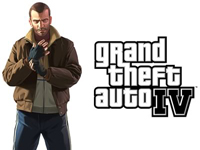
You play as Niko Bellic an immigrant who has come to Liberty City to live the American Dream. The game takes place in a redesigned Liberty City, designed to be closer to the real life New York City. The civilian characters walking along the streets have been made more life like and with the detailed graphics produced by the RAGE and Euphoria engines GTA IV has been made to feel more alive than any of its counterparts. When stealing a locked car Niko must first break the window and hotwire it before he can go anywhere, no longer does everyone conveniently leave their car open with the keys ready to go in the ignition. Vehicle control has been made more realistic to match the level of detail present in car damage. GTA III saw the series go 3D and brought the player closer to the action, GTA IV brings that action to life.

First I get the money, then I get the power, then I get the women
GTA IV is the first game in the series to enter the realm of online gaming and does so with 15 available modes of play. These modes include death matches, team based missions, and all against all. While waiting for other players the city becomes the lobby, giving you full access to explore and cause mayhem in Liberty City before the game has even started. The game features no LAN or split screen multiplayer modes, although these were hardly required with the unexpected depth of the online multiplayer mode.
GTA IV received extremely positive reviews with many reviews rating it over 98% and many of the leading gaming publications awarding it a 9.9 or a perfect 10/10. It was praised for the realistic open ended world, the entertaining storyline and the engaging multiplayer. Grand Theft Auto IV holds the Guinness World Record for the "Highest grossing video game in 24 hours" after selling 3.6 million copies on its first day on sale. As of May 31 2008 (one month after the games release) GTA IV has sold 8.5 million copies worldwide.
Points of Interest
- GTA was originally titled "Race N Chase"
- Jack Thompson has filed a number of lawsuits against the GTA series, he is now facing permanent disbarment.
- GTA IV holds the record for "Highest grossing video game in 24 hours"
- GTA IV - 6 Million sales on its first week available
- The Hot Coffee mod in San Andreas allowed a sexual mini game to be unlocked, consequently the game was banned in Australia.
- The Xbox 360 Version of GTA IV will receive 2 downloadable episodic pack, starting later this year costing Microsoft US$50 Million.
- GTA III was banned in Australia after it's initial release with the OFLC feeling it was unacceptable for a MA rating, a censored version took its place.
- GTA Vice City was altered for Australia to avoid being banned, the ability to pick-up prostitutes was disabled.
- Rockstar were known as DMA Design until the success of Grand Theft Auto III
- Released by DMA Design in 1998 for the N64 the open-ended Body Harvest allowed players to do as they wished and is believed to the straight-forward predecessor to GTA III
Videos
Grand Theft Auto III Commercial
GTA IV Trailers 1 and 2
Super Smash Brothers Series History

Super Smash Bros. is a series of fighting games involving characters from Nintendo’s established franchises battling it out. The original game was developed on a very low budget expected to go nowhere and yet has become one of Nintendo’s best selling series. It was Super Smash Bros. Melee not The Legend of Zelda: The Wind Waker or Super Mario Sunshine that was the most successful game on the Gamecube. Now, just days away from the third installment in the series, and arguably the most anticipated Wii game touching down in Australia it looks as if it’s dominance will continue.
Creation
Titled ”Dragon King: The Fighting Game” Super Smash Bros. began as a prototype created by Masahiro Sakurai and Satoru Iwata during their spare time in 1998 and did not include any Nintendo characters. Deciding that the game needed a new ‘atmosphere’ in order to be a successful fighter on home consoles, Sakurai had the idea of including Nintendo characters from various franchises. The game was granted a very small budget and was released in Japan only, where it sold several million copies. After this unexpected but much welcomed success the game was released worldwide and spawned two sequels. Super Smash Bros. Melee was given a much larger budget and development team which showed in the high levels of critical acclaim the title received for addressing the issued raised in the first title.

Dragon King: The Fighting Game initial concept
The first title was developed by Hal Laboratory, under former director Satoru Iwata and published by Nintendo. Iwata then went on to become president of Nintendo (Japan) and continued to have a strong involvement with the series. Melee was once again developed by Hal Laboratory and published by Nintendo. Brawl however was developed by a collaboration of second and third party developers including Sora, a company created by Smash Bros founder and former Hal Laboratory employee Masahiro Sakurai, this kept the original designers Sakurai and Iwata together for the third installment in the series. Nintendo opened a new office in Tokyo just for it's production so the developers could work together under direction from Sakurai.
Gameplay
The Super Smash Bros. series is unlike a conventional fighting game where players must diminish their opponents life bar. In Smash Bros. inflicting maximum damage does not guarantee victory, rather players must attempt to knock their foes off the stage, as they take damage from being hit they will become more likely to fly off the stage. Once knocked out of the open arena, players may have the opportunity to recover, by jumping back onto the platform. Some characters, such as the lighter fighters, have a longer jump and therefore a higher chance of recovering, while the heavier characters may have lower chance of making the jump they are harder to knock off of the stage.

Watch out or I'll fisticuffs you!
Multiplayer
Perhaps the greatest feature of the Smash Bros games is not only being able to battle it out against other Nintendo characters but to do so in intense 4 player action packed battles with friends for ultimate bragging rights. The specific rules are determined prior to the start of the match and the game can be set up to determine a winner in variety of different ways, the most popular being those introduced in the original title as a stock or timed battles. Stock gives players a certain amount of 'lives', the last standing player after all other contestants lose their stock is declared the winner. Players can choose any of the Nintendo Characters or stages available as long as they have been unlocked. To unlock these players must accomplish many different tasks within the game, much of which must be done through completing the single player quest.
Single Player
The first two titles are considered to be 'multiplayer' games due to the extremely strong multiplayer compared to the rather poor single player. The N64 title offered 'classic mode' as it would become known in sequels. Players choose a character and fight a series of opponents which would always be in the same order. Two single player mini-games, "Break the Targets" and "Board the Platforms" are including where you must break the targets and board the platforms respectively within a time limit. Melee saw the return of 'classic mode' but also introduced 'adventure mode' allowing players to move along in a side-scrolling world in between battles. While the series will never been known for it's single player, Nintendo attempted to give a meaningful solo experience in SSBB. Including all the past game modes with extra mini games, Brawl also includes a single player adventure, with a plot!

All you need is love, love, love
Online
Super Smash Bros. Brawl is the first title in the series to take advantage of the world of online gaming using Nintendo's Wi-Fi Connection service. Players can play one of Nintendo's finest multiplayer games with distant opponents, no longer are gamers restricted to playing against the same family members or AI you can play anyone worldwide. Online games can be played with registered friends, through the exchange of friendcodes or against any randomly selected opponents. Against friends players nicknames are displayed above their character, they are also able to communicate with up to four different preset phrases on screen which will appear above the fighter in speech bubbles. If 'Allow Spectators" has been enabled the match can be viewed by an audience who are able to bet on the outcome with coins that they have earned. Snapshots and video footage can be taken in some game modes and sent to friends via Wi-Fi Connection.
The Games
Super Smash Bros. – N64 (1999)
Release:
Jap: January 21, 1999
US: April 26, 1999
AUS/EU: November 19, 1999
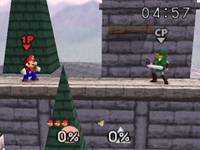
Super Smash Bros. received mostly positive reviews with much praise for the multiplayer, although many gamers felt let down by the limited single player mode. The title sold over 3.7 million copies worldwide, 2.9 million of those coming from the US where the game was never intended to see the light of day.
Super Smash Bros. Melee - GCN (2001)
Release:
Jap: November 21, 2001
US: December 3, 2001
EU: May 24, 2002
Aus: May 31, 2002
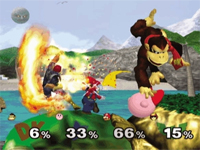
Super Smash Bros. Melee features 26 characters, 15 of which are available out of the box which has more than doubled that of the original title, as the 12 veteran fighters return and are joined by 14 others. The initial fighters available are Mario, Pikachu, Bowser, Princess Peach, Yoshi, Donkey Kong, Captain Falcon, Fox McCloud, Ness, Ice Climbers, Kirby, Samus Aran, Link, Princess Zelda and her alternate form Shiek. Unlockable characters include Luigi, Jigglypuff, Mr. Game and Watch, Prince Marth, Mewtwo. The remaining 6 characters are considered 'clone' characters as they mimic the moves of their counterparts, they are Dr. Mario, Falco, Ganondorf, Pichu, Roy and Young Link.
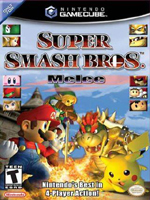
Super Smash Bros. Melee received positive reviews, with many critics agreeing that it went a long way in improving Super Smash Bros. The visuals and music were praised for as one of the best sounding and looking games on the Gamecube(at it's time). Melee has sold over 7 million copies worldwide and as of the 10th of March 2008 it is the best selling Gamecube game of all time.
Super Smash Bros. Brawl – Wii (2008)
Release:
Jap: January 31, 2008
US: March 9, 2008
Aus: June 26, 2008
EU: June 27, 2008
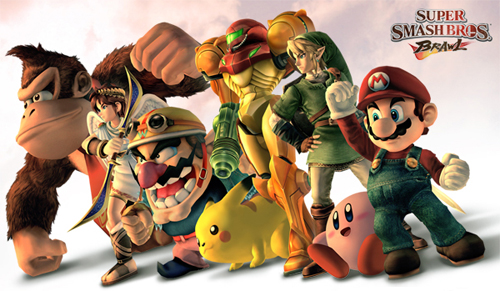
Not Pictured: The Brawling
Players have the option of controlling the game with the Wii Remote and Nunchuck together, the Wii Remote on its side, the Gamecube Controller or the Classic Controller. The series signature mutliplayer mode returns, redefined with the inclusion of "Final Smash" moves, these are much more powerful than regular attacks and are available due to temporary transformations. Other forms of multiplayer are available in 'group mode', Special Melee returns as Special Brawl, while the previous title only allowed for one customization such as 'giant' mode or 'invisible' mode Brawl allows a combination of these. Tourney mode returns to allow tournaments between human and AI fighters, while 'rotation' has also been included and allows up to 16 players to compete by switching out winners and losers after each round.
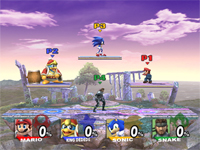
Super Smash Bros. Brawl received critical acclaim, including a perfect score from Japanese game magazine Famitsu. The unexpected depth of the single player and the unpredictability of the final smash were praised as well as the online component of the game. Brawl has sold 4.85 million copies worldwide as of March 31 2008, 500,000 units were sold in Japan on it's first day on sale.
Characters

42 Characters have taken to the area in the 3 Super Smash Bros games to date, 12 in the original, raised to 26 in Melee and then went up to 35 in Super Smash Bros Brawl. All playable characters that have appeared in a Super Smash Bros. game are listed below, in alphabetical order. The list details the series that the character originates from and which of the 3 games the are featured in.
Character | Game Series | Super Smash Bros. | Super Smash Bros. Melee | Super Smash Bros. Brawl |
|---|---|---|---|---|
| Bowser | Mario Bros. | NO | YES | YES |
| Captain Falcon | F-Zero | YES | YES | YES |
| Diddy Kong | Donkey Kong | NO | NO | YES |
| Donkey Kong | Donkey Kong | YES | YES | YES |
| Dr.Mario | Mario Bros. | NO | YES | NO |
| Falco | Star Fox | NO | YES | YES |
| Fox | Star Fox | YES | YES | YES |
| Ganondorf | Zelda | NO | YES | YES |
| Ice Climbers | Ice Climbers | NO | YES | YES |
| Ike | Fire Emblem | NO | NO | YES |
| Jigglypuff | Pokemon | YES | YES | YES |
| King Dedude | Kirby | NO | NO | YES |
| Kirby | Kirby | YES | YES | YES |
| Link | Zelda | YES | YES | YES |
| Lacario | Pokemon | NO | NO | YES |
| Lucas | Earthbound | NO | NO | YES |
| Luigi | Mario Bros. | YES | YES | YES |
| Mario | Mario Bros. | YES | YES | YES |
| Marth | Fire Emblem | NO | YES | YES |
| Meta Knight | Kirby | NO | NO | YES |
| Mewtwo | Pokemon | NO | YES | NO |
| Mr.Game & Watch | Game & Watch | NO | YES | YES |
| Ness | Earthbound | YES | YES | YES |
| Olimar | Pikmin | NO | NO | YES |
| Peach | Mario Bros. | NO | YES | YES |
| Pichu | Pokemon | NO | YES | NO |
| Pikachu | Pokemon | YES | YES | YES |
| Pit | Kid Icaris | NO | NO | YES |
| Pokemon Trainer | Pokemon | NO | NO | YES |
| R.O.B. | R.O.B. | NO | NO | YES |
| Roy | Fire Emblem | NO | YES | NO |
| Samus | Metroid | YES | YES | YES |
| Shiek | Legend of Zelda | NO | YES | YES |
| Snake | Metal Gear | NO | NO | YES |
| Sonic | Sonic the Hedgehog | NO | NO | YES |
| Toon Link | Zelda | NO | NO | YES |
| Wario | Wario | NO | NO | YES |
| Wolf | Star Fox | NO | NO | YES |
| Yoshi | Mario / Yoshi | YES | YES | YES |
| Young Link | Zelda | NO | YES | NO |
| Zelda | Zelda | NO | YES | YES |
| Zero Suit Samus | Metroid | NO | NO | YES |
Points of Interest
- Famitsu Magazine: Super Smash Bros. Brawl - perfect 40/40
- Super Smash Brothers Melee Best Selling Gamecube Game - 7 Million Copies WorldWide
- Super Smash Bros. Brawl fastest selling Nintendo game
- Super Smash Bros. Brawl - 1.4 Million US sales in first week
- Famitsu Magazine: Super Smash Bros. Melee - 37/40
- 2000 AIAS - Game Design - The Legend of Zelda: Majora's Mask
- 36 Composers provided music for Brawl
Videos
Nintendo 64 Smash Bros Commercial
People dressing up as Nintendo Characters and beating each other up with some shocking acting = genius
Gamecube Smash Bros Melee Commercial
Feeling a little boxed it
Wii Lifestyle Smash Bros Brawl Commercial
Nintendo insist of life style advertising
Metroid Series History

Article by Ben Salter
Metroid has been a servant of Nintendo, selling over 21 million copies worldwide. Described as a mixture of a platform, shooter, action and adventure game Metroid is one of Nintendo’s darker series, aimed at a more mature audience, a game craved by those looking for an adult experience on a Nintendo platform. The series is popular for its female lead character, one of the first when the game made its debut on the NES in 1986.
Creation
During the 1980's Nintendo created two titles for the Famicom Disk System simultaneously in Kid Icarus and Metroid. These companion games were released side by side on the same day in 1986 and introduced the password save feature in the North American release. Metroid was designed to combine the successful platforming of the Super Mario series with the free-roaming exploration gameplay of The Legend of Zelda along with shooting elements thrown into the mix. Halfway through the development of the debut title it was suggested that the character inside the suit be revealed to be a woman, the idea was accepted and remains one of the series signature features. While never officially admitted it is believed that the Alien films played a large role in the inspiration for the Metroid series.
The main figures involved in the Metroid development are Yoshio Sakamoto, who has directed every game in the series with the exception of Metroid II and Gunpei Yokoi who was in charge of Nintendo’s Research & Development 1 team before he passed away in 1997. Shigeru Miyamoto has rarely been involved with Metroid as his only involvement has been acting as a producer for Metroid Prime 1 & 2.
Gameplay
The Metroid series revolves around female bounty hunter Samus Aran. The games are noted for their non-linear progression and solitary exploration as Samus rarely comes into contact with any other characters. Taking inspiration from the Platforming of Super Mario Bros. and the exploration of The Legend of Zelda the games consist of shooting, platform and adventure elements conveyed in a darker mood than a majority of Nintendo’s titles. The series began in a 2D format but made the extremely successful transition into the 3D arena with Metroid Prime and its subsequent sequels. The games moved into first-person, taking strong first-person shooter elements but retaining the exploration and puzzles from the previous games to become labelled by Nintendo as a "First-Person-Adventure" game.
Samus generally begins with limited features available on her powersuit which she can upgrade along her adventure. These upgrades including missiles and the morphball, which allows the bounty hunter to roll into a small deadly ball, are often required to move into a new area. Metroid was one of the first games to allow the player explore to the left as well as to the right of screen. Players were often forced to backtrack and take a new path which has been unlocked due to Samus acquiring a new upgrade to her suit.
The Games
Metroid

Platform: NES
Release:Jap 1986
USA 1987
AUS/EU 1988
The year is 2003 on the Cosmic Calendar, Earth has come into contact with life from another planet who share their superior levels of technology with the humans. This rapid advancement in technology leads to the invention of spacecraft which are encountered by an alien group known as the Space Pirates, striking fear into the hearts of humankind. In the year 20X5 C.C a spacecraft travelling with an unknown life-form is attacked by the Space Pirates, and the life-form dubbed ‘Metroid’ is stolen. Desperate to stop the creation of a biological weapon the Galactic Federation send the best space-hunter available, Samus Aran, to defeat the Space Pirate Leader on the Planet Zebes and destroy the Metroids. At the time of the release Metroid was critically received well for its non-linear gameplay. However it has not received as much praise as subsequent sequels and the Virtual Console and Gameboy Advance versions were criticised for unfixed glitches and flickering graphics.
Metroid II: Return of Samus
Platform: Gameboy
Release:Jap 1992
USA 1991
AUS/EU 1992
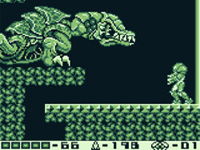
Metroid II takes place in an undetermined time frame after Metroid Prime 3, Samus has defeated the Space Pirates on several occasions at this point in time. The Galactic Federation sends teams to the home planet of the Metroids, SR388, to ensure they cannot be used for evil purposes. Metroid II: Return of Samus DX was announced in 1999 as a coloured remake for the Gameboy Color but the title never saw the light of day.
Super Metroid
Platform: SNES
Release:Jap 1994
USA 1994
AUS/EU 1994
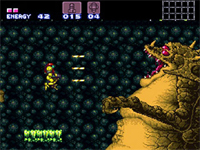
A Metroid Larva has imprinted itself on Samus, believing her to be its mother. Bringing the creature to the Ceres Space Colony it becomes apparent that Metroids can aid mankind as well as being harnessed for evil. Ridley invades the colony killing the scientists and stealing the Metroid, the last of its kind. While searching the rebuilt Planet Zenes Samus is confronted by the giant “Super Metroid”, she then must go on to defeat the Mother Brain, with the aid of the Metroid Larva.
Super Metroid is universally praised by fans and critics alike and to this day remains one of the most popular games on the Super Nintendo. 1.4 million units have since been sold as the title constantly remains in ‘best games of all time’ lists. Super Metroid was the last Metroid game to be released in series creator Gunpei Yokoi's lifetime.
Metroid Fusion
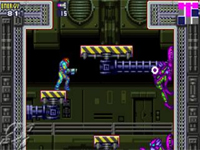
Platform: GBA
Release:Jap 2003
USA 2002
AUS/EU 2002
Taking place after the events of Super Metroid Samus returns to SR-388 where the eradication of Metroids has overwhelmed the planet's ecosystem as parasitoids, known as "X" have become the dominate species. The species X have the ability to replicate their host creature's physical appearance and possess their memories while at the same time slowly killing them. While searching the planet SR-388 Samus is infected by the X parasites affecting her central nervous system on her return to the Galactic Federation. Using the cells of the Metroid Samus had previously saved the parasite is countered resulting in Samus taking on Metroid-like characteristics. Samus takes it upon herself to destroy the X including the SA-X, a parasite mimicking her, aboard the B.S.L. station.
Metroid Fusion initially received some criticism for moving away from the open-ended gameplay that the series was known for and adopting a more linear storyline focus. Overall Fusion received generally positive reviews for being an "outstanding achievement on the Game Boy Advance". Fusion sold over 100,000 copies in the US on its first week of release and has gone on to sell over 1.25 million copies.
Metroid Prime
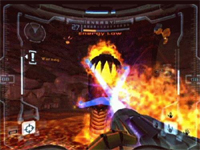
Platform: Gamecube
Release:Jap 2003
USA 2002
AUS/EU 2003
Metroid Prime is the first installement in the ‘Prime trilogy’. Receiving a distress call from the Space Pirate Frigate Orpheon, Samus boards the ship to investigate where she defeats the Parasite Queen, who falls into the ships reactor upon her demise. The Orpheon self destructs destroying Samus’ Varia suit in the process. She then encounters Ridley who she follows to Tallon IV where she discovers the Chozo Ruins, the remains of an ancient society destroyed by a corrupting substance known as Phazon. During her exploration of Tallon IV Samus must recover the 12 artifacts, scattered across the planet before she can encounter the phazon-mutated beast Metroid Prime.
Prime was critically acclaimed for taking the exceptional 2D series and improving on it with the move into the 3rd dimension. It received many game of the year awards for 2002 and was praised for its detailed graphics, with special effects and varied environments, immersive atmosphere, excellent level design as well as its moody soundtrack and sound effects while staying true to the Metroid formula. Prime did receive some criticisms for unusual controls and lack of focus on what could have been a decent storyline, but generally faired extremely well. The game has gone on to sell over 1.5 million copies in the US along with 250,000 in Europe and 78,000 in Japan. Prime was the second best selling US game of 2002 and the 8th best selling Players Choice game in Australia.
Metroid Zero Mission
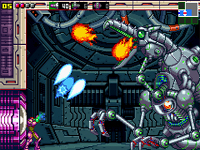
Platform: GBA
Release:Jap 2004
USA 2004
AUS/EU 2004
The game’s background is presented to resemble a hand-drawn comic which is carried on throughout the cut-scenes. Samus is presented in more detailed than her rendition in Metroid Fusion as the game makes the most out of the Gameboy Advance's technology. By linking Zero Mission to Metroid Fusion players were able to unlock various extras depending on the percentage of game finished. The game received critical acclaim, including multiple review scores over 90%.
Metroid Prime 2: Echoes
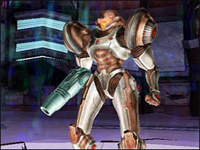
Platform: GameCube
Release:Jap 2005
USA 2004
AUS/EU 2004
Taking place 6 months after the events of Metroid Prime an advanced race known as the Luminoth are protecting the energy of a planet called the Light of Aether. The planet is split into 2 dimensions with the opposite known as the Dark Aether, home to the Ing, a race of dark who are locked in a fierce battle for survival with the Luminoth. The Ing lead the race to survive by taking the energy from three of Aether's four temples, as the energy cannot support both worlds the first to gain access to all 4 temple's energy will be the victor. Samus must assist by returning all energy to their rightful place and restore peace to the Luminoth. Travelling between dimensions Samus must face-off against her mysterious counterpart Dark Samus and return the energy to the Light of Aether.
Metroid Prime 2: Echoes received positive reviews receiving many scores upward of 85%. Although it received positive scores the multiplayer was criticised and subsequently omitted for the next title. It was also noted that there was too much back-tracking required once a new item was acquired and that the save stations were too infrequent.
Metroid Prime Pinball
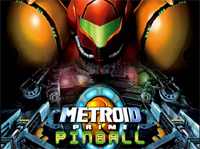
Platform: Nintendo DS
Release:Jap 2006
USA 2005
AUS/EU 2005
Metroid Prime Hunters
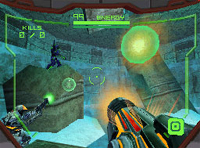
Platform: Nintendo DS
Release:Jap 2006
USA 2006
AUS/EU 2006
Metroid Prime Hunters takes place after the events of Metroid Prime but before those of Metroid Prime 2: Echoes. The Galactic Federation receives a message stating "ultimate power" resides in the Alimbic solar system. Bounty hunter Samus Aran is sent to investigate and destroy any possible threats. Samus discovers the Alimbic a highly advanced society has died out many years ago, but just prior to this they formed a seal around a monstrous creature named Gorea and placed it on a spaceship called Oubliett. The ship was sent to a dimensional rift called the Infinity Void, only to be opened when eight keys known as the "Octoliths" were collected. Competing with rival bounty hunters Samus must be the first to collect the 8 pieces of the Octolith.
Metroid Prime Hunter’s received high reviews and was praised for its mutliplayer modes, becoming one of the most played game on Nintendo Wi-Fi Connection. The customisable rooms, rankings and being one of the only DS games to support online chat earned it acclaim. The game was criticised for having a very linear and easy single player with very little variety between levels and bosses in the single player mode. It was noted as being different than any other Metroid game in that it was a lot simpler and focused more on combat than puzzles.
Metroid Prime 3: Corruption
Platform: Nintendo Wii
Release:Jap 2008
USA 2007
AUS/EU 2007
Metroid Prime 3: Corruption takes place 6 months after the events of it’s predecessor Metroid Prime 2: Echoes rounding out a time frame of 1 year for the Metroid Prime trilogy. Samus and three other bounty hunters of the Galactic Federation are deployed to the planet Norion, where the Space Pirates are concentrating an attack on a nearby Federation base. A Phazon asteroid, called a Leviathan Seed, is on a collusion course with Norion, after being severally wounded by her nemesis Dark Samus the game's protagonist manages to activate the planet's defense systems.

This is even more painful that it looks
Samus later learns that the Phazon-based attacks of Dark Samus have corrupted her, as a result the Federation equips her with a "Phazon Enhancement Device", allowing her to harness the Phazon energy. Samus discovers other planets and their inhabitants are slowly being corrupted by the Leviathan seeds and it becomes her task to save them by destroying the seeds. As she progresses Samus is slowly corrupted further by the Phazon inside her despite the aid of the PED. Along with the Galactic Federation she travels to the planet Phaaze, the source of all Phazon in the galaxy. Samus must travel to its core, where she will finally confront Dark Samus once and for all. Metroid Prime 3 concludes the Prime trilogy although at the end of the game a mysterious spaceship is seen following Samus flying into hyperspace.
Metroid Prime 3: Corruption received extremely positive review scores, including a 10/10 from Nintendo Power, making it the first game to receive a perfect score with the introduction of their new scoring system. Many reviews praised the motion controls saying "After playing Metroid Prime 3 you'll never want to play a shooter with dual analog controls again" as well as the quality of the graphics using the Wii hardware. As of March 31 2008 Metroid Prime 3: Corruption has sold over 1.31 million copies worldwide and remains one of the Wii’s best selling titles.
Points of Interest
- Metroid was one of the first games to use the password save system
- A Metroid title for the Nintendo 64 making use of the 64DD accessory was planned but never eventuated.
- In 2003, the live action movie rights were acquired but expired, they were re-acquired for a release in 2006 but the film is yet to see the light of day.
- It is possible to finish Metroid Zero Mission with a completion level of 9%
- Gunpei Yokoi’s last title was Super Metroid, the series would not see another entry for 8 years.
- Rumors circulated in 2005 about the development of a title called Metroid Dread, supposedly a 2D side-scroller for the Nintendo DS. A message in Prime 3 said "Experiment status report update: Metroid project 'Dread'
- The composer of the NES Metroid, Hirokazu Tanaka, stated that he wanted to make a musical score that made players feel as if they were encountering a "living organism" and had no distinction between music and sound effects. The Metroid theme was heard only when Mother Brain was defeated at the end of the game. No melodies are present at any other time.
- Kenji Yamamoto, Super Metroid composer, came up with some of the game’s themes by singing them while riding his motorcycle.
- Metroid Prime 3: Corruption was intended to be a Wii launch title in 2006 but was delayed multiple times finally seeing a release in August 2007.
- Nintendo released the Metroid Prime 3 Preview Channel as a free download from the Wii Shop Channel showing off gameplay videos in a new marketing attempt by Nintendo.
Videos
Super Metroid Japanese Commercial
As always old Nintendo commercials ensure hilarity
Subscribe to:
Posts (Atom)